Retired on Paper › Family records › The Estate Settlement Record Book
Named executor? Somebody has to tell the agencies, file the claims and keep track of it all for months.
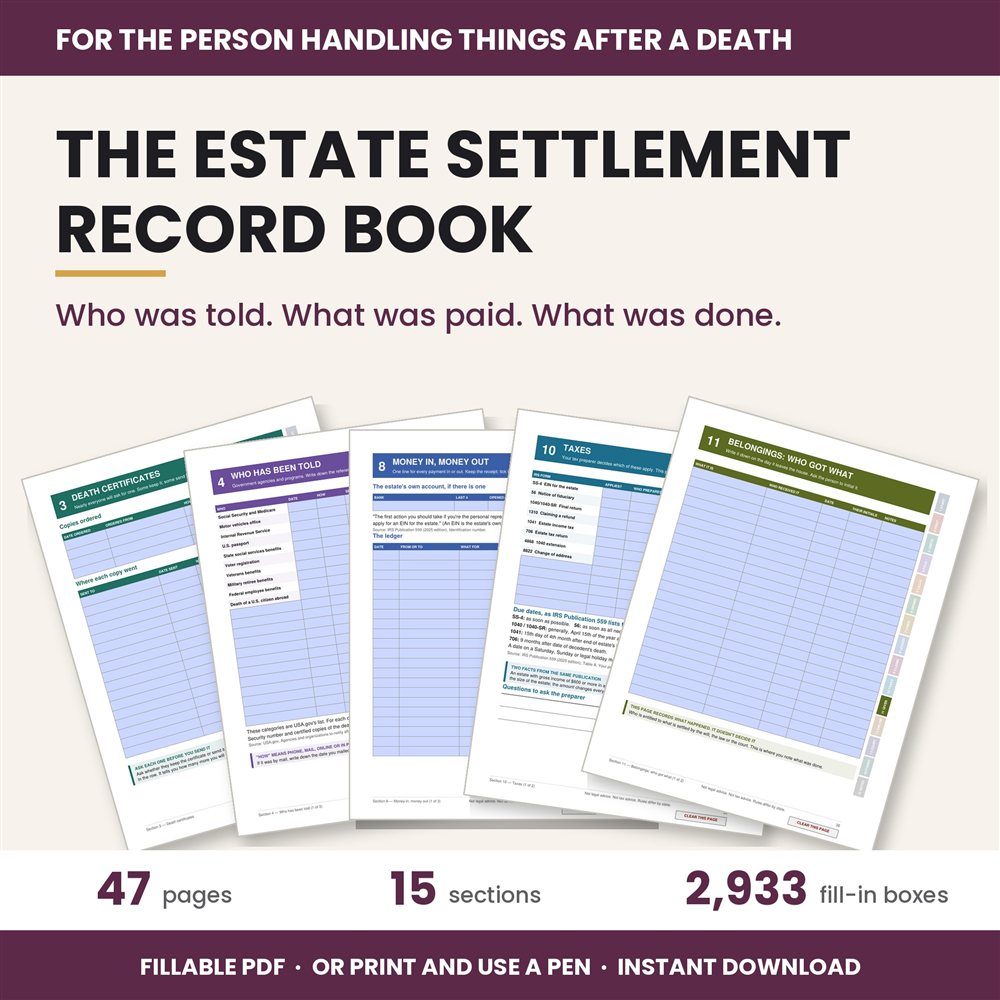
When someone dies, somebody has to tell the agencies, order the certificates, file the claims, pay the bills, and keep track of all of it for months. This book is where you write down what you did, when, who you spoke to, and what came of it.
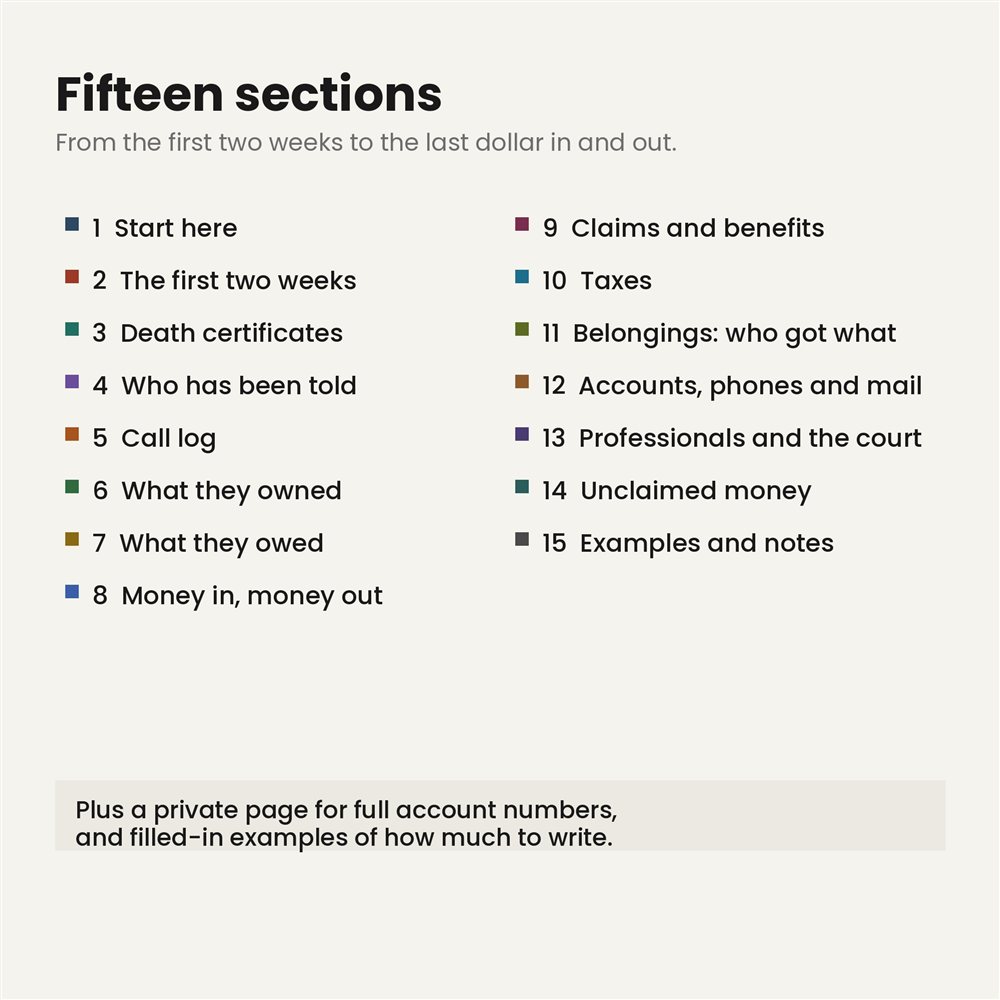
47 pages · 15 sections · 2,933 fill-in boxes · fillable or printable
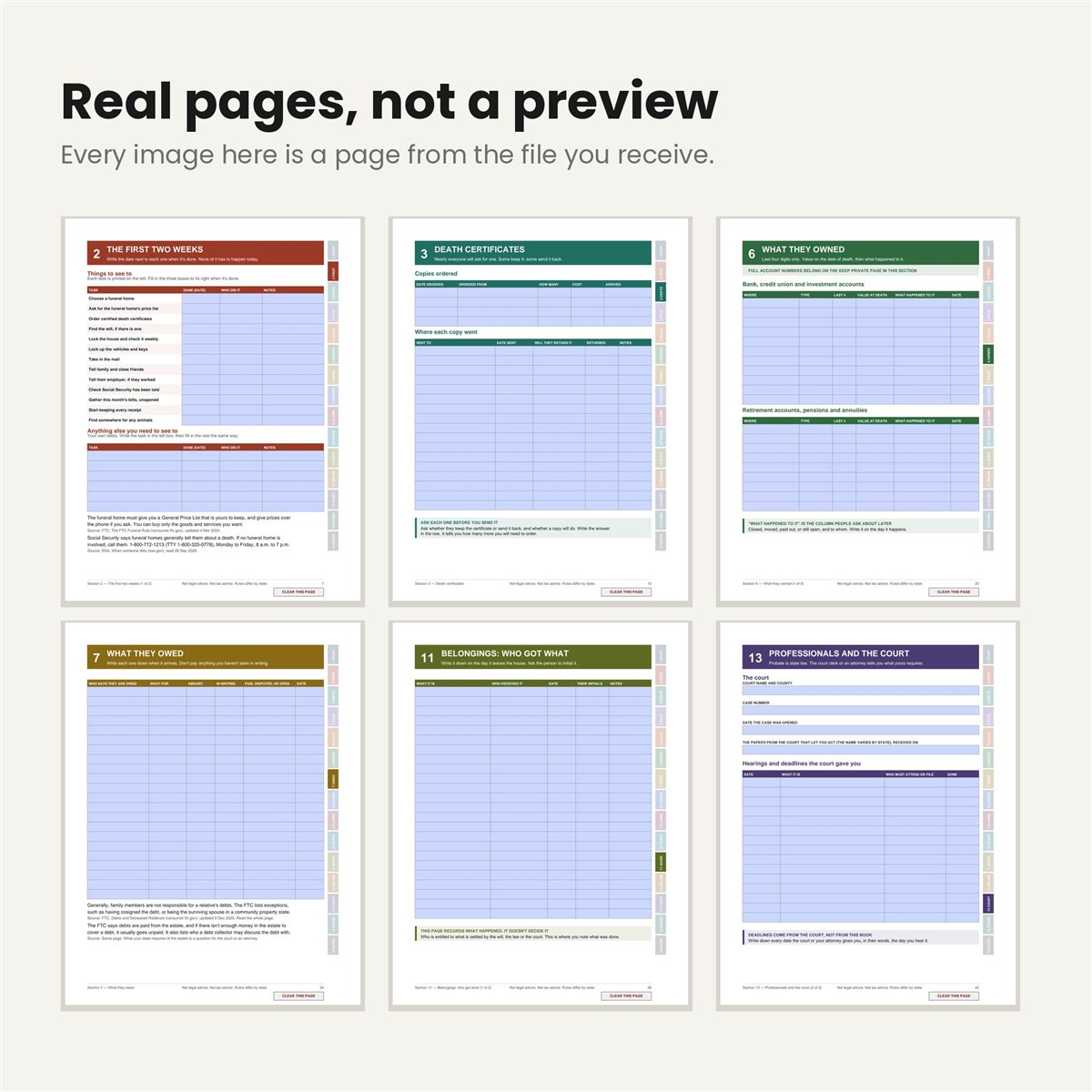
It works when you type in it. The boxes line up and the Tab key moves through each page in reading order. It doesn't save itself, so the first page shows you exactly how to save your work.
The federal facts inside name their source and the date they were read, so you can check them yourself: who USA.gov says to notify, Social Security's one-time death payment and its deadline, the IRS forms an executor may need and their due dates, and what the FTC says about a relative's debts.
The executor, the surviving spouse, or the grown son or daughter doing the paperwork. Also a thoughtful thing to hand someone who has just been named executor.
A computer and a free PDF program: Adobe Acrobat Reader, Google Chrome or Microsoft Edge (tested on a Windows computer). No account, no subscription, nothing to sign up for.
No. The first page shows you exactly how to save your work in each of those programs.
Yes. Every box prints as a bordered line, so it works with a pen straight out of the printer. Print the whole thing or only the pages you need. US Letter, 8.5 x 11.
No. It's a digital download from our Etsy shop. For personal use in one household.
This is an organizer, not a legal document, and it does not tell you what to do. Settling an estate is governed by state law; the rules differ from state to state and change over time, and nothing in this book tells you what your state requires. Nothing here is legal, tax or financial advice, and we are not attorneys or tax preparers. This book is not a substitute for the advice of an attorney. For what the law requires of you, ask the probate court for the county or an attorney; for taxes, ask a tax preparer.
This item was created with the use of AI.
 Retired on Paper